

What if the secret to a moist, artisan-style loaf isn't more oil or hidden sugars, but a tiny seed that can hold 12 times its weight in water? You've likely tried gluten-free or low-carb breads that feel more like eating dry sawdust than a comforting snack. It's a common struggle for the 8.5 million people in the UK currently seeking better digestive health. You want a slice that tastes authentic and keeps you full without the inevitable mid-afternoon energy crash.
Using chia in bread is the simple, organic revolution your kitchen needs. We promise to show you how this nutrient-dense addition transforms the texture of your loaf while providing a significant boost to your daily fibre intake. You'll discover the specific ways these seeds help maintain steady glucose levels and how to enjoy a sandwich that finally loves you back. We're diving into the science of hydration, the benefits of omega-3s, and the practical steps to achieve a perfect crumb every time.
Key Takeaways
- Learn how to effortlessly reach your daily 30g fibre target and support heart health by harnessing the power of Omega-3-rich ancient seeds.
- Discover why incorporating chia in bread is the secret to achieving a perfectly moist crumb and avoiding the common pitfalls of dry, gluten-free baking.
- Master the essential hydration techniques that transform simple seeds into a functional "gel," ensuring your loaves are as soft as they are nutritious.
- Understand the importance of choosing organic, "real food" ingredients over ultra-processed alternatives to ensure your daily bread truly loves you back.
- Explore the practical differences between using whole and ground seeds to customise the texture and metabolic impact of your low-carb bakes.
The Rise of Chia in Bread: What Makes it a Superfood Staple?
Your morning toast shouldn't feel like a compromise. Traditional white loaves often skip the nutrients your body craves, leaving you with a spike in blood sugar and a mid-morning crash. Integrating chia in bread changes the game. These tiny seeds, known scientifically as Salvia hispanica, act as a functional upgrade. They pack a massive punch of fibre and protein into every slice. It is bread that loves you back.
The "superfood" label isn't just marketing fluff. It refers to the incredible concentration of micronutrients found in this tiny package. When you choose bread enriched with chia, you are opting for a dense source of antioxidants and minerals like magnesium and phosphorus. These nutrients help protect your cells and support energy levels throughout the day. Organic. Keto. Wholesome.
The History of the Chia Seed
Long before they reached UK health aisles, chia seeds were a cornerstone of Aztec and Mayan diets. Warriors relied on them as "runner's food" for sustained energy during long journeys. By 2021, the UK chia seed market had grown to a valuation of over £10 million, reflecting a massive shift in how we view health staples. As we move toward the "clean label" baking revolution predicted for 2026, chia has transitioned from a novelty to a kitchen essential for anyone avoiding ultra-processed ingredients.
Chia vs. Traditional Grains
Standard wheat flour is notoriously carb-heavy; a single slice of white bread contains roughly 15g of carbohydrates with minimal fibre. Chia seeds flip this ratio. They are naturally rich in heart-healthy omega-3 fatty acids and provide about 34g of fibre per 100g. This makes chia in bread a natural ally for grain-free and organic lifestyles. Choosing organic chia is vital to avoid the synthetic pesticides often found in industrial farming. Our Chia & Flax Keto Bread uses only the purest ingredients. No nasties. No fillers. Just real food.
- High Fibre: Supports gut health and keeps you feeling full.
- Omega-3s: Essential fats that support heart and brain health.
- Low Carb: Perfect for maintaining stable energy levels without the sugar crash.
You deserve to know exactly what is hidden in your sandwich. By swapping traditional grains for nutrient-dense seeds, you take control of your nutrition without sacrificing the joy of a crusty, delicious slice of bread.
The Nutritional Profile: Why Chia is a Game-Changer for Your Health
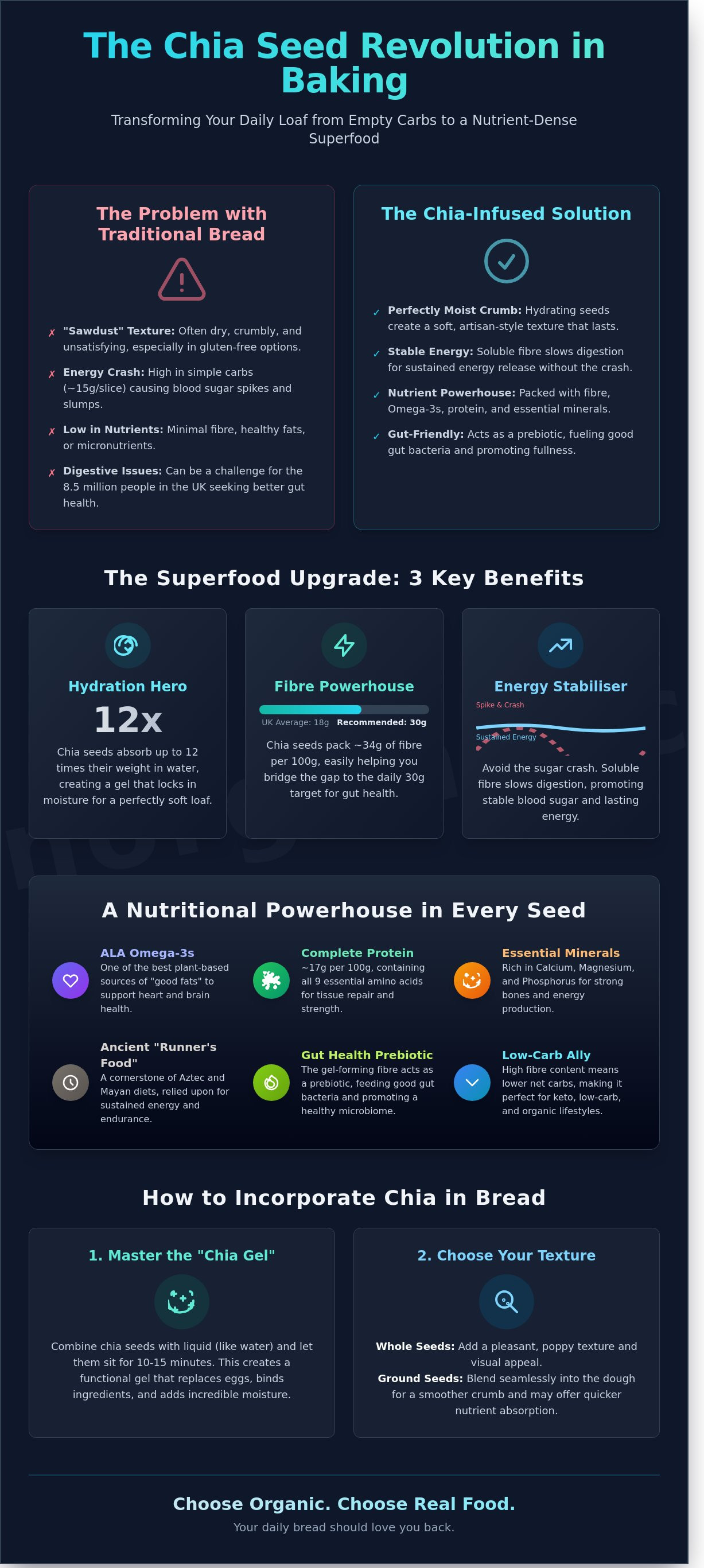
Chia seeds aren't just a trendy garnish. They're a nutritional powerhouse. When you include chia in bread, you transform a simple staple into a functional food that supports your body throughout the day. Most adults in the UK only reach about 18g of fibre daily, well below the 30g target recommended by the British Dietetic Association. A single serving of chia-dense bread can significantly bridge that gap, making your morning toast a tool for better health.
These seeds are one of the best plant sources of Alpha-linolenic acid (ALA), an Omega-3 fatty acid. These "good fats" may help support heart health and maintain healthy cholesterol levels. It's about more than just calories; it's about quality. Chia provides a complete protein profile, containing all nine essential amino acids. Organic. Nutrient-dense. Real.
- Stable Energy: The soluble fibre in chia slows down carbohydrate digestion. This can contribute to stable blood sugar levels and prevent the common "spike and crash" associated with white bread.
- Protein Punch: With roughly 17g of protein per 100g, chia seeds help repair tissues and keep you feeling strong.
- Heart Support: High levels of ALA Omega-3s are associated with reduced inflammation and improved cardiovascular wellness.
Gut Health and Digestion
Your microbiome thrives on diversity. Chia seeds act as a prebiotic, providing the fuel your good gut bacteria need to flourish. When chia seeds meet liquid, they swell and form a gel-like consistency. This process aids digestion and promotes a lasting sense of fullness that helps curb unnecessary snacking. You can learn more about optimising your internal ecosystem in our gut health foods guide.
Micronutrients: Calcium, Magnesium, and More
Beyond the basics, chia seeds are rich in "hidden" minerals. They contain significant amounts of calcium, magnesium, and phosphorus. These are essential for bone health and consistent energy production. Interestingly, these minerals often become more bioavailable when baked. The moisture and heat in the oven help neutralise compounds like phytates that might otherwise block mineral absorption.
Our Chia Flax Keto Bread leverages this science to deliver maximum nutrition in every bite without the heavy carb load. By choosing chia in bread, you're opting for a loaf that loves you back. Explore our selection to see how easy it is to upgrade your daily nutrition with real, wholesome ingredients.
Texture and Moisture: The Science of Chia in Bread
Bread often fails when you remove the gluten. It becomes crumbly, dry, and quite disappointing. That is where using chia in bread changes the game. These tiny seeds are biological powerhouses. When they meet moisture, they undergo a fascinating transformation. They don't just soak up liquid; they create a thick, protective gel.
This gel acts as a structural scaffold for the entire loaf. In traditional baking, gluten provides the "glue" that holds everything together. Without it, your bread can easily fall apart. Chia seeds step into this role with quiet confidence. They bind the ingredients, giving your keto or gluten-free loaf a sturdy yet flexible foundation. It is a natural, plant-based solution that respects your body and your dietary goals.
Moisture Retention and Shelf Life
Mucilage is the secret weapon for keto bakers. This natural, slippery substance forms the outer layer of the seed when it is hydrated. It can hold up to 12 times its weight in water, and this hydration doesn't just evaporate during the baking process. It stays locked within the crumb, keeping every slice soft and approachable.
Most supermarket loaves rely on chemical humectants or ultra-processed additives to stay soft. We don't. By harnessing the power of real seeds, we achieve a long-lasting freshness naturally. No preservatives needed. Just the power of real seeds. Your bread stays moist for days, ensuring that "freshly baked" feeling lasts much longer than standard gluten-free options. Real food. Real results.
The Perfect Crumb
Creating an authentic bread feel without heavy carbs is a challenge we love to solve. Incorporating chia in bread provides that essential "spring" in the crumb that many low-carb alternatives lack. When combined with other ingredients, they create a synergy that mimics the bite of a traditional artisanal loaf. We often use them alongside flaxseeds to build a complex, nutrient-dense profile that satisfies the soul.
This combination ensures your toast has a satisfying weight and a delightful, artisanal crunch. Whole seeds add little pops of texture that elevate a simple sandwich into a gourmet experience. If you want to dive deeper into how different seeds impact your loaf, explore our Seeded Bread Guide for more expert tips. You can also experience this perfect balance yourself with our Chia Flax Keto Bread. Organic. Keto. Delicious.
How to Incorporate Chia in Bread: Practical Tips for Home Bakers
You don't need to be a master baker to start using chia in bread. It is one of the most forgiving ingredients you can add to your kitchen cupboard. Whether you want to boost the fibre content of a standard loaf or create a keto-friendly masterpiece, success comes down to a few simple, mindful adjustments. These small changes ensure your bread stays light, moist, and packed with vitality.
- Choose your texture. Decide between whole seeds for a satisfying crunch or ground chia for a smoother, more uniform finish.
- Hydrate first. Chia seeds can absorb up to 12 times their weight in liquid. Soak them in water for 15 minutes before adding them to your dough to prevent the seeds from drying out your loaf.
- Watch your ratios. Balance is vital. Aim for about 5 to 10 per cent of your total flour weight. Too much chia can make the crumb feel gummy or overly dense.
- Layer your flavours. Chia is naturally neutral. Elevate your bread by adding sea salt, cracked black pepper, or fresh rosemary to the mix.
- Turn down the heat. Bake at a slightly lower temperature, perhaps 180°C instead of 200°C. This helps protect the delicate omega oils from breaking down during the bake.
Whole vs. Ground Chia
Whole seeds are perfect when you want that classic, rustic "seeded" aesthetic. They provide a delightful pop of texture in every bite. However, if you are focusing on structural integrity in grain-free or keto recipes, ground chia is the superior choice. It acts as a powerful binder, much like the flax egg technique used in vegan baking. Ground seeds create a gel that holds the dough together, replacing the role usually played by gluten.
The "No Nasties" Formula
We believe in a simple philosophy at Dillon Organic. No gluten. No hidden sugars. Just real seeds. When you bake with chia in bread at home, you are taking control of your health. To keep your homemade loaf at its best, store it in the fridge for up to five days. For longer life, slice the loaf before freezing. It toasts beautifully straight from the freezer, giving you a quick, nutrient-dense meal whenever you need it. Real food shouldn't be complicated. It should just be good.
Discover how our Chia and Flax Keto Bread can support your wellness journey with zero effort required.
Beyond the Bake: Finding the Perfect Chia Bread for Your Lifestyle
Choosing the right loaf is an investment in your daily vitality. Most supermarket shelves are packed with ultra-processed options that often contain over 10 different additives, preservatives, and emulsifiers. These industrial ingredients can disrupt your gut microbiome and trigger unwanted glucose spikes. Real food acts differently. By prioritising organic purity, you ensure your body receives nutrients without the chemical baggage. Including chia in bread provides a stable source of energy that supports long-term metabolic health. It is about reclaiming the joy of a sandwich without the dreaded afternoon slump.
Organic. Keto. Delicious. We believe you shouldn't have to spend hours in the kitchen to eat well. When you don't have time to bake your own, choosing a brand that acts as a protective gatekeeper for your health is essential. It is a simple way to stay on track with your goals while enjoying the artisanal textures you love.
The Dillon Organic Difference
We believe quality starts at the source. We meticulously select our organic seeds to ensure they meet the highest standards of purity and nutritional density. Our Chia Flax Keto Bread stands as the ultimate solution for those seeking a nutrient-dense, low-carb lifestyle. It is packed with omega-3 fatty acids and plant-based protein, making it a functional powerhouse for your kitchen. For those who prefer a more traditional, nutty profile, our Original Flax Loaf offers a familiar texture with all the keto-friendly benefits. No hidden sugars. No nasties. Just real, honest ingredients.
How to Enjoy Your Chia Bread
This bread is versatile enough for any meal of the day. The robust structure of chia in bread makes it perfect for heavy toppings. Try these simple serving suggestions:
- Smashed avocado with a squeeze of lime and a pinch of chilli flakes.
- Two poached eggs with runny yolks for a protein-rich brunch.
- A light drizzle of our Chicory Fibre Syrup for a prebiotic sweet treat.
- Toasted with almond butter and sliced strawberries.
Discover how our small-batch loaves can support your wellness journey. It is time to reclaim the joy of eating and enjoy bread that loves you back. You deserve a loaf that supports your health without ever sacrificing flavour.
Embrace the Future of Your Daily Loaf
Incorporating chia in bread is more than a 2026 trend; it's a fundamental shift toward better health. These tiny seeds pack a punch with 34.4g of fibre per 100g and high levels of Omega-3 fatty acids that help support your heart health. You get a loaf that stays moist for longer and keeps you feeling full, all without the blood sugar spikes associated with traditional white flour.
At Dillon Organic, we've perfected the balance of ancient nutrition and modern dietary needs. We believe you shouldn't have to choose between your keto goals and the joy of a crusty slice. Our recipes focus on radical transparency and real ingredients. Organic. Keto. Delicious. No hidden sugars or ultra-processed additives. Just high-fibre, nutrient-dense bread that fits your lifestyle perfectly.
Ready to revolutionise your breakfast? Explore our range of organic, keto-friendly chia and flax loaves and discover bread that loves you back. It's time to fuel your body with the quality it deserves.
Frequently Asked Questions about Chia in Bread
Does putting chia seeds in bread make it soggy?
No, adding chia in bread won't make your loaf soggy if you balance the moisture correctly. These tiny powerhouses can absorb up to 12 times their weight in water. If you don't adjust your recipe, they'll actually pull moisture from the dough and make it drier. We recommend soaking them first or adding 2 tablespoons of extra liquid for every tablespoon of seeds used. This keeps your crumb moist and bouncy rather than wet.
Is chia in bread keto-friendly?
Yes, chia in bread is a staple for keto lifestyles because it's incredibly low in net carbs. A 100g serving of chia seeds contains about 34g of fibre but only 7g of net carbohydrates. This high fibre content helps slow down glucose absorption, which is vital for staying in ketosis. At Dillon Organic, we use these seeds to create a satisfying texture without the blood sugar spikes associated with white flour. Organic. Keto. Delicious.
Can I replace poppy seeds with chia seeds in my bread recipe?
You can absolutely swap poppy seeds for chia seeds using a simple 1:1 ratio. While poppy seeds offer a nutty crunch, chia seeds provide a similar texture with a massive boost of Omega-3 fatty acids. Just remember that chia is more absorbent than poppy seeds. If you're swapping more than 25g, consider adding a splash of water to ensure your dough stays supple and easy to work with. It's a simple upgrade for any home baker.
How much chia should I add to a standard loaf of bread?
For a standard 500g loaf, adding 2 to 3 tablespoons of chia seeds is the sweet spot for nutrition and texture. This amount provides roughly 5g of protein and 10g of fibre to your bake without overwhelming the yeast. If you go beyond 10% of the total flour weight, the bread might become too dense. We've found that this balance keeps the loaf light while making it bread that loves you back.
What is the difference between black and white chia seeds in baking?
There's no significant nutritional difference between black and white chia seeds; the choice is purely about how you want your bread to look. Black seeds are more common and provide a speckled, rustic appearance to your loaf. White seeds are perfect if you want to hide the extra nutrition in a lighter-coloured bread. Both varieties offer the same 18% protein content, so choose the one that fits your kitchen's aesthetic. No nasties, just pure nutrition.
Do I need to grind chia seeds before adding them to bread dough?
You don't need to grind chia seeds before adding them to your dough, but doing so can help your body absorb the nutrients more easily. Whole seeds provide a lovely crunch and keep the real food feel of an artisanal loaf. If you prefer a smoother texture, a quick 10-second pulse in a spice grinder works wonders. Either way, you'll still benefit from the high mineral content and healthy fats. Discover how Dillon Organic can support your wellness journey with our expertly crafted loaves.
Is chia bread safe for people with gluten sensitivities?
Chia seeds are naturally 100% gluten-free, making them a safe and brilliant addition for those with sensitivities. They act as a natural binder, which is helpful when you're baking without traditional wheat gluten. At Dillon Organic, we use seeds like chia to provide structure and chew in our gluten-free ranges. Always check that your other ingredients are certified gluten-free to avoid cross-contamination in your home kitchen. We're here to help you enjoy bread again without the bloat.
How does chia in bread help with weight management?
Chia in bread helps with weight management by increasing feelings of fullness and reducing hunger pangs throughout the day. Their high soluble fibre content creates a gel-like substance in the stomach, which can slow digestion and keep you satisfied for longer. A 2017 study published in Nutrition Research and Practice found that consuming chia as a mid-morning snack significantly reduced short-term food intake. It's a simple way to make your morning toast work harder for your health goals.